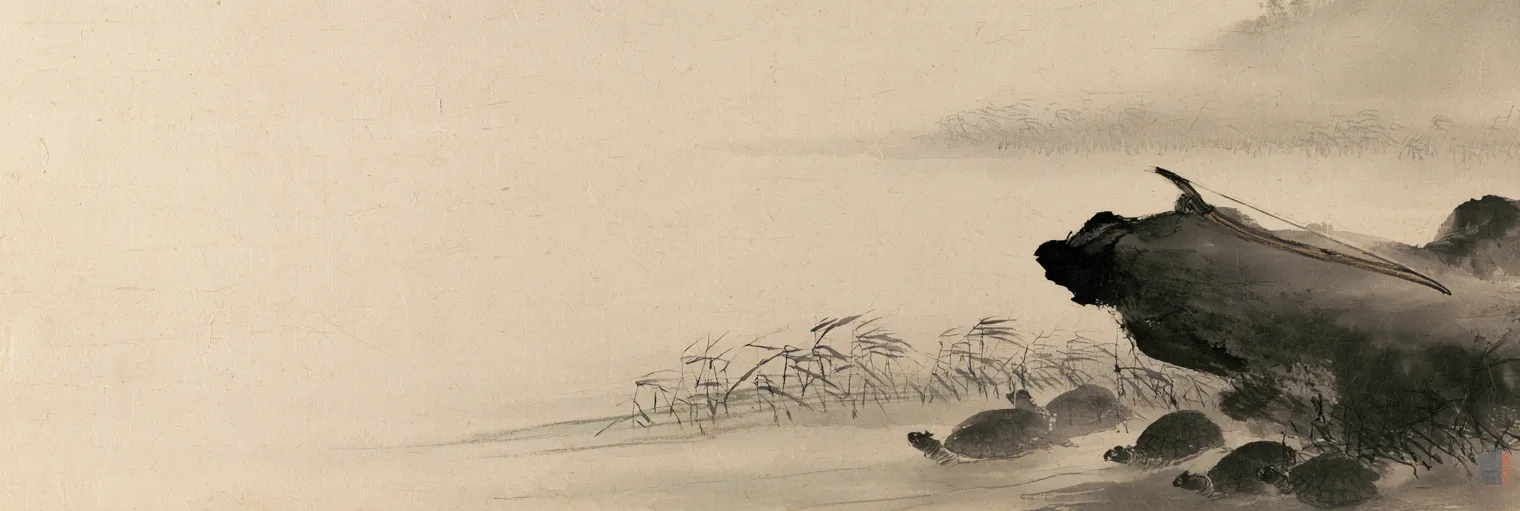
Jumong (주몽, 朱蒙) was the founder and first king of Goguryeo (고구려, 高句麗), the northernmost of Korea's Three Kingdoms. The Samguk Sagi (삼국사기, 三國史記), Korea's oldest surviving official history, compiled in 1145, records that he was twenty-two when he reached a place called Jolbon and named his kingdom Goguryeo, and the year it gives corresponds to 37 BCE. He died in the nineteenth year of his reign, at forty.
His name is a description of what he could do. In the language of Buyeo (부여, 夫餘), the old kingdom on the northern plains where he grew up, jumong meant a good archer.
You may have first met him on television. MBC's historical drama Jumong, with Song Il-kook in the title role, first aired on May 15, 2006 and ended on March 6, 2007 with episode 81. The story of Jumong stands on three kinds of record. There is a stone: the Gwanggaeto Stele, raised by Goguryeo itself in 414. There is a book: the Samguk Sagi of 1145. And there are the chronicles of the Hwandan Gogi (환단고기, 桓檀古記), the collection of Korean chronicles this site works from.
This article follows one life through all three, from an egg to a bow, from a bow to a river, from a river to a throne. Zexeda reads them together this way: in the records, Jumong does not start from nothing. He picks up something old and carries it on.
What does the name Jumong mean?
Start with a seven-year-old boy and a bow he made himself.
年甫七歳, 嶷然異常, 自作弓矢射之, 百發百中. 扶餘俗語, 善射爲朱蒙, 故以名云.
He was barely seven, and already uncommonly bright. He made his own bow and arrows and shot them, and hit the mark a hundred times out of a hundred. In the speech of Buyeo a good archer was called jumong, and so that became his name.
— Samguk Sagi, Goguryeo annals, King Dongmyeong the Holy, year 1
He made the bow himself. And the people around him simply called him what he did: the one who shoots well.
The stone writes his name a little differently. The Gwanggaeto Stele stands in Ji'an, a city on the Chinese bank of the Yalu River, the river that forms the border between China and North Korea. It is a block of rough stone 6.39 meters tall, raised in 414 to honor one of Goguryeo's great kings, and on it the founder is King Chumo (추모, 鄒牟). Korea's national encyclopedia, the Encyclopedia of Korean Culture, lists Chumo among the ways his name was written. Jumong and Chumo are one man, spelled by two hands seven centuries apart.
Where did Jumong come from?
The Samguk Sagi begins the answer one generation earlier, with a frog.
An old king of Buyeo had no son and prayed to the mountains and rivers for an heir. One day his horse came to a large stone, faced it, and wept. The king had the stone moved, and there was a small child, gold in color and shaped like a frog. The king named him Geumwa (금와, 金蛙), Golden Frog, and raised him as his heir. Later the capital was moved, and the kingdom came to be called East Buyeo.
Geumwa was king of East Buyeo when he came upon a woman by a stream. He asked who she was, and the Samguk Sagi keeps her answer. She was Yuhwa (유화, 柳花), a daughter of the river lord. She had been out with her younger siblings when a man came to her who called himself Haemosu (해모수, 解慕漱), a son of the Lord of Heaven. He led her away to a house by the water, and then he left and did not come back. Her parents were furious that she had followed a man with no matchmaker, and sent her into exile.
Geumwa found this strange, and shut her in a room.
Then the light came. Sunlight fell on her. She moved her body out of its way, and the light followed and fell on her again. She became pregnant, and what she gave birth to was a large egg.
The king threw the egg to the dogs and pigs, and they would not eat it. He left it in the road, and the cattle and horses stepped around it. He left it in an open field, and the birds covered it with their wings. He tried to split it open and could not break it. At last he gave it back to its mother. She wrapped it and set it in a warm place, and a boy broke through the shell and came out.
The stone in Ji'an says the same thing in a few words: King Chumo broke out of an egg and came down into the world.
The Gaseobwon Buyeo Gi, the chronicle of East Buyeo in the Hwandan Gogi, tells the birth with a date and one different detail. It records that Yuhwa was led away by a grandson of the Buyeo royal house, and that the boy broke out of the egg on the fifth day of the fifth month of 79 BCE. The Bukbuyeo Gi (북부여기, 北夫餘紀), the chronicle of North Buyeo in the same collection, records Haemosu as the man who founded North Buyeo itself, raised up as its ruler in 232 BCE.
In both tellings the boy arrives the same way. His mother has been sent away by her own family, and he is born in another king's house. In the Samguk Sagi that king tries to be rid of him before he has even hatched. He has nothing of his own except a line that runs back through his mother to the river, and through the light to heaven.
Why did Jumong have to run?
He grew up at Geumwa's court, and he was too good.
King Geumwa had seven sons. They were always at play with Jumong, and none of them could match his skill. The eldest, Daeso (대소, 帶素), went to his father. Jumong was not born of a human being, he said, and he is bold. If we do not deal with him early, there will be trouble later. Let us be rid of him.
The king would not do it. He sent Jumong to look after the horses.
The Samguk Sagi records what the boy did in the stables. He could tell which horse was the fast one. He fed that horse less, so that it grew thin, and he fed the slow horses well, so that they grew fat. The king chose the fat horses for himself and gave the thin one to Jumong.
The princes and the ministers began to plan his death again. His mother found out in secret, and told him.
國人將害汝. 以汝才略何徃而不可. 與其遟留而受辱, 不若逺適以有爲.
The people of this country mean to harm you. With your gifts and your wits, where could you go and not do well? Better to go far away and make something of yourself than to linger here and be shamed.
— Samguk Sagi, Goguryeo annals, King Dongmyeong the Holy, year 1
She did not ask him to stay near her. She told him to go.
He left with three friends. The Samguk Sagi names them Oi, Mari and Hyeopbo. They traveled until they came to the Eomsa River (엄사수, 淹㴲水). They needed to cross, and there was no bridge. He feared that the soldiers chasing them would catch up.
Jumong turned to the water and spoke to it. He told it who he was, and he asked it what to do. I am a son of the Lord of Heaven, he said, and a grandson of the river lord. Today I am running, and those who chase me are almost here. What am I to do?
於是, 魚鼈浮出成橋, 朱蒙得渡. 魚鼈乃解, 追騎不得渡.
At that, fish and turtles rose to the surface and made a bridge, and Jumong was able to cross. Then the fish and turtles scattered, and the horsemen chasing him could not cross.
— Samguk Sagi, Goguryeo annals, King Dongmyeong the Holy, year 1
The stone remembers the same riverbank. It was carved more than seven centuries before the Samguk Sagi was compiled, and it gives his words in its own way. The king came to the crossing and said that he was King Chumo, a son of high Heaven, and that his mother was the daughter of the river lord. Then he asked the river:
爲我連葭浮龜. 應聲, 卽爲連葭浮龜. 然後造渡.
"For my sake, may the reeds be joined and the turtles rise." No sooner had he spoken than the reeds were joined and the turtles rose. After that he was able to cross.
— Gwanggaeto Stele, face one (414)
The book says fish and turtles. The stone says reeds and turtles. In both, with the pursuit almost on him, the boy who was named for his archery does not reach for his bow. He says where he comes from, and the river answers.
How did Jumong become a king?
On the far bank, the Samguk Sagi records, he met three men on the road — one in hemp, one in a patched robe, one in clothes made of water plants — and took the meeting as a gift from heaven. He gave each a task that suited him, and they all went on together to Jolbon.
He looked at the land there. The soil was rich, and the mountains and rivers made it hard to attack, and he decided this would be his capital. There was no time to build a palace. He put up a thatched hut beside a stream and lived in that. He named the kingdom Goguryeo, and with it he took Go (고, 高) as his family name. He was twenty-two. The Samguk Sagi fixes the year by the calendars of its day, and it corresponds to 37 BCE.
One day he saw vegetable leaves floating down the stream, and understood that people were living higher up. He went hunting in that direction and found a neighboring kingdom, and its king, Songyang, came out to meet him. Songyang asked where he had come from. Jumong gave the answer he had given the river: I am a son of the Lord of Heaven.
We have been kings here for generations, Songyang said. This land is small and has no room for two masters. You set up your capital only a short while ago. Will you become my vassal? The words angered Jumong. The two of them argued, and then they settled it with bows, shooting against each other to test their skill. Songyang could not match him. The next year he gave up his kingdom, and the Samguk Sagi records the name his land was given:
二年, 夏六月, 松讓以國来降, 以其地為多勿都, 封松讓為主. 麗語謂復舊土為多勿, 故以名焉.
In the second year, in summer, the sixth month, Songyang came and surrendered with his kingdom. His land was made Damul-do, and Songyang was made its lord. In the speech of Goguryeo, recovering old land is called damul, and so it was named.
— Samguk Sagi, Goguryeo annals, King Dongmyeong the Holy, year 2
Recovering old land. That is what the Samguk Sagi says the word damul meant in the speech of Goguryeo, and Songyang, who had just given the land up, was made its lord.
The Samguk Sagi itself carries a second account of how he came to rule. At the very line where its main text says he named the kingdom Goguryeo, the book adds a note in small characters:
一云, “朱蒙至卒本扶餘, 王無子, 見朱蒙知非常人, 以其女妻之. 王薨, 朱蒙嗣位.”
One account says: "Jumong came to Jolbon Buyeo. The king had no son. He saw Jumong and knew he was no ordinary man, and gave him his daughter as a wife. When the king died, Jumong succeeded to the throne."
— Samguk Sagi, Goguryeo annals, King Dongmyeong the Holy, year 1, note in the text
So the main text of the Samguk Sagi records a young man naming a kingdom beside a thatched hut, and its note records a son-in-law taking over a throne that was already there.
The Bukbuyeo Gi records a succession too, with names and a date. The last ruler of North Buyeo was Go Museo. He had no son. He saw that the young archer was no ordinary man and gave him his daughter in marriage, and when he died in 58 BCE, Jumong entered into the great succession by his last command. He was twenty-three.
The Samseong Gi, the opening chronicle of the Hwandan Gogi, ends its upper part with a sentence about him. He took up North Buyeo and rose, it says, he restored the old statutes of the Dangun, and he began a new era called Damul. Dangun (단군, 檀君) was the title of the rulers of Korea's first kingdom, and the first of them, Dangun Wanggeom, is remembered as the founder of the Korean nation. And the stone in Ji'an, before it lists a single battle, opens with the same claim in its own words: the founder came out of North Buyeo.
Put these side by side. The note in the Samguk Sagi writes succeeded. The Bukbuyeo Gi writes entered into the succession. The Samseong Gi writes took up and restored. And the stone begins with the place he came out of. Each of the four names something that was there before him. That is why Zexeda reads Jumong as a man who carried something on. The kingdom was new. What he put into it was old.
Is Jumong the same person as King Dongmyeong?
Dongmyeong (동명, 東明) is the name in Jumong's royal title. The first line of the Samguk Sagi calls the founder of Goguryeo King Dongmyeong the Holy and gives his personal name as Jumong.
The Bukbuyeo Gi gives the name to someone else. When the armies of Han China pushed into the region, a man named Go Dumak-han raised a volunteer army against them, named himself Dongmyeong, and became the fifth ruler of North Buyeo. He was the father of Go Museo, the king whose daughter Jumong married.
There is also a witness in stone. In 702 a nobleman of Goguryeo named Cheon Nam-san was buried in China, and the epitaph carved for him names the two in two separate clauses: Dongmyeong opened a kingdom, and Jumong opened a capital. The whole line is set out in What Was Buyeo?. And the Encyclopedia of Korean Culture, in its entry on King Dongmyeong, writes that Dongmyeong and Jumong, the founder of Goguryeo, were originally, in all likelihood, different people.
In the Bukbuyeo Gi, then, Dongmyeong is the grandfather of Jumong's wife.
How did Jumong's story end?
In the fourteenth year of his reign his mother, Yuhwa, died in East Buyeo, the country he had run from. King Geumwa buried her with the rites due to a queen mother and built a shrine for her. That winter Jumong sent envoys to Buyeo with gifts from his own land, to repay that kindness. The court that had once planned his death had honored his mother, and he answered with thanks.
In the summer of his nineteenth year his son Yuri escaped from Buyeo with his mother and came to him. The king was overjoyed and made him crown prince. A few months later the Samguk Sagi closes his life in one line:
秋九月, 王升遐, 時年四十歳. 葬龍山, 號東明聖王.
In autumn, the ninth month, the king passed away. He was forty years old. He was buried at Mount Yong, and he was called King Dongmyeong the Holy.
— Samguk Sagi, Goguryeo annals, King Dongmyeong the Holy, year 19 (19 BCE)
The stone tells the same ending as something seen in the sky. King Chumo, it says, took no delight in his worldly throne. A yellow dragon was sent down to meet him. On the hill east of Holbon, which is the stele's name for Jolbon, the king stepped onto the dragon's head and rose into heaven.
The book records a grave at Mount Yong (용산, 龍山), a name written with the characters for dragon and mountain. The stone records the dragon itself. Both are left standing here, as the records leave them.
What did Jumong leave behind?
An egg, a bow, a river full of turtles, a dragon. Those are the pictures the records leave.
But look at what the records put first and last. The first thing the stone says about him is where he came from: North Buyeo. The last thing the upper part of the Samseong Gi says about him is what he took up and what he restored. Between those two lines stands a man who, every time he had to say who he was — to a river, to a rival king — gave the same answer. He did not say what he could do with a bow. He said whose son he was.
In the chronicles this site works from, the line he took up runs back a long way. It runs through North Buyeo to the rulers called Dangun and to Hongik Ingan, the ideal Korea's founding story places at the root of that first kingdom: to broadly benefit all human beings. And the kingdom he named kept an old appointment with heaven. Every year in the tenth month the people of Goguryeo gathered for a great rite called Dongmaeng, one of Korea's oldest festivals.
This story, read from the records, is about someone who continues. A boy with nothing of his own makes a bow with his own hands, and when the road runs out at the water's edge, he remembers where he is from. That is the Jumong the stone and the chronicles hand down: the archer who became a king by carrying an old house across a river.
Continue with Zexeda
If the story of a man who carried something old across a river has stayed with you, the reading continues in the Zexeda newsletter — a quiet weekly letter on Korea's ancient wisdom, one story and one small practice at a time. You are welcome to walk along.
Key takeaways
- Jumong (주몽, 朱蒙) founded Goguryeo, the northernmost of Korea's Three Kingdoms. The Samguk Sagi (1145) records that he named the kingdom at Jolbon at twenty-two, in the year corresponding to 37 BCE, and died in his nineteenth year as king, aged forty.
- His name means good archer in the speech of Buyeo: at seven he made his own bow and arrows and never missed. The Gwanggaeto Stele (414) writes his name as King Chumo.
- The Samguk Sagi records his mother Yuhwa saying that a man who called himself Haemosu, a son of the Lord of Heaven, led her away; sunlight followed her, and she gave birth to an egg. The Gaseobwon Buyeo Gi records that she was led away by a grandson of the Buyeo royal house and dates the birth to the fifth day of the fifth month of 79 BCE.
- When Daeso and the court of East Buyeo planned his death, his mother told him to go far away and make something of yourself.
- At the Eomsa River he told the water he was a son of the Lord of Heaven and a grandson of the river lord. The Samguk Sagi records a bridge of fish and turtles; the stele records reeds and turtles.
- The main text of the Samguk Sagi has him name Goguryeo beside a thatched hut. A note in the text records another account, in which he married the daughter of the king of Jolbon Buyeo and succeeded to the throne. The Bukbuyeo Gi records that in 58 BCE he entered into the succession of North Buyeo by the last command of its ruler Go Museo, whose daughter he had married.
- The Samguk Sagi records that the land of the rival king Songyang was named Damul-do, from damul, a Goguryeo word for recovering old land. The upper part of the Samseong Gi ends by saying Jumong took up North Buyeo and restored the old statutes of the Dangun.
- The Samguk Sagi calls him King Dongmyeong the Holy. The Bukbuyeo Gi gives the name Dongmyeong to Go Dumak-han, and the Encyclopedia of Korean Culture writes that the two were originally, in all likelihood, different people.
- The Samguk Sagi records his burial at Mount Yong. The stele records that he stepped onto the head of a yellow dragon and rose into heaven.
- Zexeda reads the records together this way: Jumong did not start from nothing. He picked up something old and carried it on.
Further reading: 10 Amazing Facts about Dangun (Kindle)
This article is for educational and reflective purposes and shares interpretations of Korea's ancient wisdom traditions. It is not medical, psychological, or professional advice.