There is a small, ordinary moment that many people dread and almost no one talks about. You are standing at a urinal, or sitting in a stall, and someone walks into the restroom. You hear the door. You hear their shoes. And your body, which was about to do the simplest thing a body does, stops. Nothing comes. You stand there pretending, counting the seconds, and the harder you try, the tighter it gets.
Nothing is wrong with your bladder. What stopped you was a habit — the habit of being watched. Years of noticing who is nearby, of wondering what they think, of bracing against being judged, have settled into the muscles of your body until the body does the bracing on its own, without asking you.
Korea's Samil Singo has a map for this, and Zexeda has a name for what the body has stored: seup (습, 習) — habit, the memory your body keeps. The first practice cleared the memory of your mind. This one clears the memory of your body. You sit as before, you pick up the same sword of sunlight, and you take your own body apart in your imagination, one organ at a time, until the habits stored in it have nowhere left to hide.
What is seup, the habit the body keeps?
The Korean word seup (습) means a habit — something done so many times that it does itself. The Chinese character it is written with, 習, puts feathers (羽) over white (白), and China's oldest dictionary, the Shuowen Jiezi, explains it as to fly again and again — a young bird beating its wings until it can fly. That is what a habit is: a thing learned by doing it again. Zexeda uses the word for something precise: the sum of everything your body has stored — the body you were handed by your parents, and everything every repeated act since has laid down in the body's own memory.
Here is the picture. You come into the world with a body you did not choose. Then life begins, and the body meets the world through six doors: it hears, it sees, it smells, it tastes, it feels desire, and it touches. Something comes through one of those doors — a sound, a face, a taste, a hand — and you reach for it, or you flinch from it. Reach, and reach again. Flinch, and flinch again. Do it for ten years, thirty years, and the reaching and the flinching stop being something you do. They become something your body is.
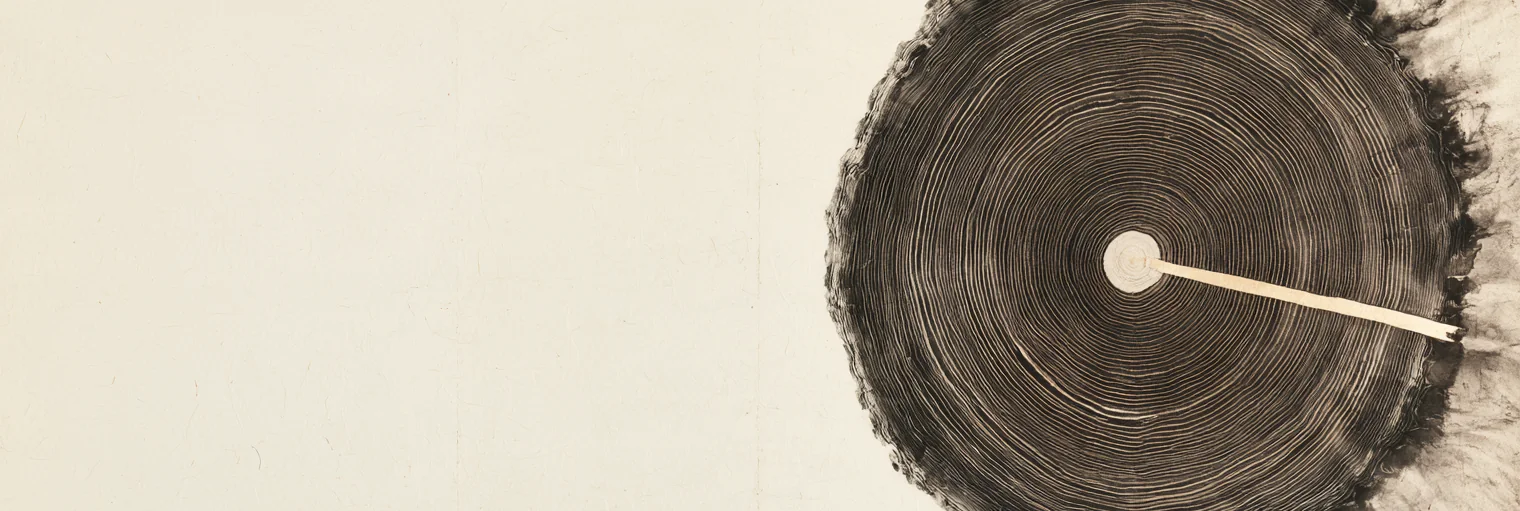
And the body does not store these alone. Each act of reaching or flinching came with a feeling: joy, fear, sorrow, anger, craving, or aversion — the six feelings the karma practice worked on. The feeling fuses with the act, the act fuses with the body, and the whole thing settles in a layer. Then another layer on top of it. Like the rings of a tree. Like the plates of a turtle's shell. Year after year the body hardens around what it has stored, until it is a long way from the soft, whole thing it was at the start.
Where does the Samil Singo place the body?
Korea's 366-character scripture, the Samil Singo, says in its Truth Chapter that every person receives three true things whole — seong, myeong, and jeong: true nature, true life, and true essence. Then it says what happens next. Ordinary people lose sight of the root, and three delusions take hold in their place: mind over nature, energy over life, and body over essence.
身 依精 有厚薄 厚貴薄賤 "The body rests on essence, but it comes to have abundance and lack — abundance is called noble, lack is called lowly."
Read that slowly, because it is kinder than it sounds. The body is not an enemy. It rests on something true: your jeong (정, 精), your true essence, which the scripture says has no abundance or lack in it at all. The body is that essence, clouded. An essence that has started measuring itself, counting what it has against what it does not, calling one side worthy and the other side worthless.
The scripture then names the road the body walks. Of its three roads — feeling, breath, and contact — the body's road is contact (촉, 觸), and it branches into six states:
觸 聲色臭味淫抵 Contact: sound, color, smell, taste, lust, touch.
Six doors. Everything the body has ever stored came in through one of them.
So seup is not a word the Samil Singo uses. It is Zexeda's name for what the Samil Singo describes: the body delusion, grown thick with repetition. The karma practice turns the mind delusion back toward true nature. This practice turns the body delusion back toward true essence. The scripture has a phrase for that turning — banmang jeukjin (반망즉진, 返妄卽眞): the false, turned back, becomes true.
How does a fear become a body?
Watch it happen in one life.
A child wants to be approved of — by a parent, a teacher, the other children. The wanting is natural; every child has it. But with the wanting comes a fear: what if I am not? What if they laugh, or sigh, or turn away? So the child begins to watch. Who is looking? What do they think? Is this right? Did I do it well enough?
The watching never switches off. By the time that child is grown, the nervous system has learned to scan every room before anything else. The shoulders rise a little whenever someone is near. The neck holds. The jaw sets. There is a push to do everything perfectly, and when perfect is not possible, a quick cover — a small lie, a performance of being fine — and one more layer goes onto the shell. The muscles, and the thin sheets of tissue that wrap them — the fascia, the web that runs through the whole body — stay tight all day without ever being told to.
And then one day that grown person stands at a urinal, hears the door open behind them, and nothing comes. The body that learned to brace against being watched is bracing now, around the bladder and the tissues of the lower belly, and the simplest thing has become impossible. Not because anything is broken. Because a fear has become a body.
That is seup. Multiply it by every door — sound, color, smell, taste, desire, touch — and every feeling — joy, fear, sorrow, anger, craving, aversion — and every year you have lived, and you have the body you are sitting in right now. Held long enough, these holdings go deeper every year: into the organs, the muscles, the fascia, the nerves. The Truth Chapter's picture of a life run this way is spare — it follows the roads and their states and falls into "birth, growth, decline, sickness, and death." The mind delusion, running its eighteen states on repeat, builds a hell of its own making. The body is where it keeps the bricks.
Why can no one else clear it for you?
For the same reason no one else could clear your karma. The habit lives in your body, and only you live there.
A doctor can see the tight shoulder. A therapist can hear about the fear. A parent, a partner, a teacher can love you through all of it. But none of them can go inside your nervous system and find the moment, forty years ago, when a child decided to start watching the room. Only you have been there the whole time. No god, no religion, no parent, no friend, no spouse can set you free in your place. Only you can free yourself from what you yourself have built. That is not a sentence about loneliness. It is a sentence about possession. The key was never anywhere else.
How do you clear seup? The practice, step by step
The method is simple to say and long to do. You take your body apart, in imagination, piece by piece, and you look at each piece honestly until the habit stored in it has nothing left to cling to. Here is how.
Begin after the karma practice is mostly done
This practice uses the same room, the same seat, and the same sword as clearing karma. It is the second cut, not the first. Zexeda recommends beginning it only once the karma practice is most of the way through — roughly four-fifths of the way, when the scenes of your life come up and almost nothing comes with them. There is a practical reason. The body's memories are fused to the mind's. Cut into an organ, and old scenes will rise with it. If those scenes still carry their feelings, you will be fighting on two fronts at once.
Set the room and the seat as before
A quiet room. An hour or two, or less at first, but the same time every day. No one coming in, phone in another room. Sit on the floor with your legs crossed, a firm cushion under your hips, your back straight. This time, close your eyes. You will be looking inward at pictures, and the bare wall is no longer needed.
Learn what is inside you first
Before you begin, spend some time with an anatomy book or a good diagram. Learn roughly where things are and what they look like: the brain, the heart, the lungs, the liver, the stomach, the kidneys, the bladder; the nervous system; the fascia; the lymph vessels; the cells. You do not need to be a doctor. You need enough of a picture that when you imagine an organ, you see an organ and not a blur. The clearer the picture, the deeper the practice goes.
Start with the brain
Imagine the top of your skull being opened and your brain lifted out and set on a table in front of you. Step back from it. Look at it. This is the brain that a whole lifetime of your thoughts, actions, and reactions has built — not an idea of a brain, but this one, yours, as it is today. Admit that it is yours. Then see it in detail: the folds, the two halves, the membranes and vessels that wrap it.
Pick up the sword of sunlight
Now take out the sword — the same sword of sunlight you used to clear karma, the first of Dangun's three seals. It does not have to be a sword. The sword is a picture of a power: the power to cut and the power to melt. A surgeon's scalpel will do. So will a hammer, a furnace, a fire, a cleaver. What matters is that it cuts what it touches and dissolves what it cuts.
Cut the brain in half. Look between the halves: the nerves, the tissue, the blood, the layers and channels. Then cut it smaller, and smaller, and melt each piece until nothing is left on the table.
When the brain will not disappear
Here is where the practice begins in earnest. For many people, the brain will not stay gone. You melt it, and it is back, whole, on the table. That is not failure. That is seup. The brain is where a great deal of it is stored, and the stored habit is what keeps rebuilding the picture.
Practitioners of this path describe a particular thing that happens here. As they cut into the brain, something that is not brain comes out of it — most often a silvery metal, pushing up through the tissue and bending the blade, so that the brain cannot be cut or will not dissolve. It differs from person to person. But the silver metal shows up most in people who have lived watching the room: who have spent their lives being looked at, needing to be approved of, arranging themselves around other people's eyes.
What do you do with it? You keep cutting. Dozens of times, hundreds of times — cut, take apart, melt, burn — until the metal stops coming. And one day it does. You cut the brain and it simply goes, cleanly, and nothing pushes back. That is the sign: the brain's seup has, for now, mostly cleared. For some people this takes days. For others, weeks.
Along the way, other things will rise: feelings tangled in the tissue, scenes you thought you had cleared, scenes that never came up because they were stored in the body rather than the mind. Cut them along with the brain. The sword cuts memory as easily as it cuts tissue. This is what it was given to you for — to lift you out of the hell your habits built. Only you can do it, and you can.
Sometimes it is not metal
For some people it is not metal that comes out but insects — centipedes, ants, cockroaches, creatures with no name — pouring out of an organ in numbers that do not stop. You burn them away and more come. The quantity is the message. That organ is holding that much: a reaction, a feeling, an act, repeated until it had nowhere to go but there.
The sign of clearing is the same. One day the organ is just an organ. Nothing comes out of it. You cut it, and it goes.
Go down into the lower belly
Then take the next organ, and the next. Whatever you learned from the anatomy book, bring it to the table: heart, lungs, liver, stomach, kidneys. And especially the organs of the lower belly — the bladder, the prostate, the reproductive organs — which, for anyone who has stood frozen at a urinal, hold more than they should. Set them on the table. Cut. Watch the metal or the insects come. Keep cutting, dozens or hundreds of times, until only the organ is there, and then until the organ is gone.
If memories come up with them — and for these organs in particular they will — cut those too. They are either karma the first practice did not reach, or karma that went down into the body and became habit. The same sword clears both.
Then the whole body
Arms and legs. The muscles. The sheets of fascia. The nerves, the lymph, down to the cells — as far as your knowledge of your own body reaches. Days, weeks, sometimes months. Piece by piece, as far as you can see.
If it brings up more than you can hold
All of this is imagination, and your body sits whole and safe on its cushion throughout. But what comes up is real, and for a few people it is more than they can hold alone: panic, nausea, a fear that does not ease when you open your eyes, or any pull toward harming the body in waking life. If so, stop. Hands on the floor, eyes open, breathe until the room is back. If you live with an illness, an eating disorder, or a history of harming yourself, do this practice slowly, and let someone who knows you — a counselor or a doctor — know that you are doing it. And if an organ hurts in waking life, that is a question for a doctor, not for the cushion. The practice is for what the body has kept, not for what it needs treated.
What happens when seup begins to clear?
Practitioners who have gone the length of this describe the same few things.
The eyes of other people stop mattering. Not because you have decided they should not, but because the body that used to brace against them is no longer bracing. You walk into a room and your shoulders stay down. Approval — from a parent, a friend, a crowd — becomes something you can take or leave. And yes: someone walks into the restroom, the door bangs, and nothing in you tightens at all.
The nerves and muscles and fascia that spent decades knotted begin to let go, and the body feels lighter — as if a coat you had forgotten you were wearing had finally come off.
None of this is a promise, and none of it keeps a schedule. It is what people on this path have found when the work went deep enough. Your body has its own layers, and it will give them up in its own order.
The second cut: from body back to true essence
The three seals of Dangun — sword, mirror, and bell — are the shape of Zexeda's whole path, and the sword is its first stage: the clearing. The karma practice was the sword's first cut, turning the mind delusion back toward true nature. This practice is the second, turning the body delusion back toward true essence. The Samil Singo's Truth Chapter calls the whole movement returning the false to the true (返妄卽眞), and this is what the return looks like from the inside: not a new body acquired, but an old shell released.
Clearing karma frees you from the hell your mind built. Clearing seup frees you from the hell your body kept.
And when the body has given up what it was holding, something becomes possible that was not possible before. The true essence underneath — the jeong that never had abundance or lack in it — can be recovered. Not yet recovered; that belongs to a later stage of the path, and it will come on Zexeda in its own season. But the ground is ready for it. The shell is off.
No god, no religion, no parent, no friend, no spouse can do this in your place. Only you can set yourself free. By turning the false back, the true is recovered.
Continue with Zexeda
If you would like company on this road, the Zexeda newsletter is a quiet weekly letter that walks the sword, the mirror, and the bell one small practice at a time. You are welcome to walk along.
Key takeaways
- Seup (습, 習) means habit — something repeated until it does itself. Zexeda uses it for the memory your body keeps: the body you were handed, plus everything every repeated reaction since has stored in it.
- The Samil Singo places the body among the three delusions: the body rests on true essence (jeong) and clouds it by measuring abundance and lack. Its road is contact, with six doors — sound, color, smell, taste, lust, and touch.
- A fear becomes a body. Watching the room, needing approval, bracing against judgment — repeated for decades, these settle into the muscles, fascia, nerves, and organs until the body does them on its own. A bladder that will not release when someone walks in is the habit, not the organ.
- No one can clear it for you. The habit lives in your body, and only you live there.
- The practice: begin once the karma practice is mostly done. Same room, same seat, eyes closed. Study a little anatomy first. Imagine the brain lifted out onto a table; cut and melt it with the sword of sunlight until it goes cleanly.
- Watch for what is not the organ. Silver metal that bends the blade, or insects that keep coming, show how much is stored there. Keep cutting — dozens, hundreds of times — until nothing comes out and the organ simply goes.
- Then the lower belly, then the whole body — organ by organ, as far as your knowledge reaches. Memories that rise with the organs are cut with the same sword.
- Stop if it brings up more than you can hold. Hands on the floor, eyes open, breathe. Go slowly and with support if you live with illness, an eating disorder, or a history of self-harm.
- When seup clears, practitioners describe other people's eyes ceasing to matter and a body that feels lighter. These are what people have found, not promises.
- This is the second cut of the sword, the first of Dangun's three seals: karma frees the mind, seup frees the body, and the ground is ready for true essence to be recovered.
This article is for educational and reflective purposes and shares interpretations of Korea's ancient wisdom traditions. It is not medical, psychological, or professional advice.